Warning – Graphic content!
“Yer but …! “
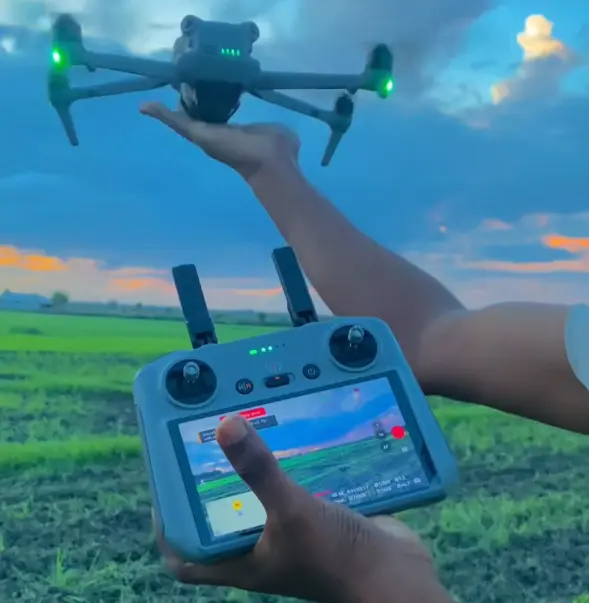
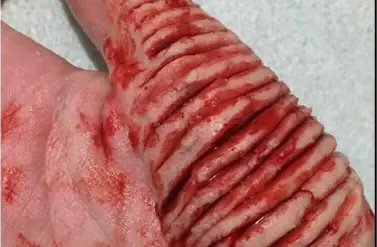
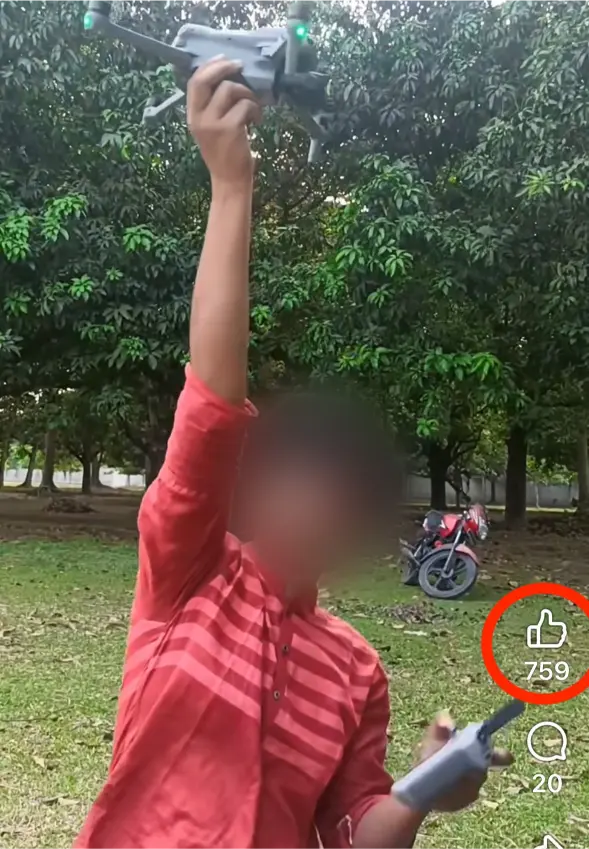
In 2018 a rather shocking image came up on one of my social media drone pages where somebody was injured while hand launching their drone! The image was hard hitting and straight to the point. After spending some time looking on the web it turns out this isn’t a one off, across the world many pilots are being injured as a result of hand launching their drones. Is it been taught properly, or at all, or is this a practice that we should avoid at all cost.
I contacted the individual and asked him what happened.
“A DJI Spark, one moment it was lying on my hand, the next minute I couldn’t get my hand away quick enough…! I spent hours in surgery and I’m not sure what I’ll be left with”
I wished him a speedy recovery! 8 years on I would interested to know how he is doing.
The whole situation peeked my interest, why were people doing something that had the potential to maim them? So I decided to do some research.
So why do people do it?
- They think it looks “pro”
On social media, especially with FPV and camera-operator content, hand catching gets framed as a skill. - Bad landing surfaces
If you’re flying from boats, long grass, rocky ground, or sand, it’s logical to want to protect the expensive toy. - Copycat behaviour
New pilots imitate what they’ve seen, not understanding the potential risks. - False confidence / muscle memory
Regular flying can breed complacency. Most hand-catch incidents happen to experienced pilots who are “comfortable” with the aircraft. - Bad advice online
There are plenty of YouTube tutorials that casually present hand-catching as normal practice without necessarily covering the safety concerns.
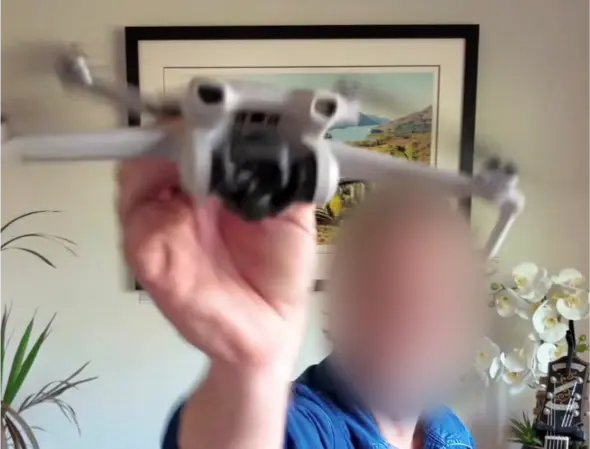
Before I look at the negatives lets look at the makeup of a drone and how it works.
Most drone propellers are made from lightweight, tough materials chosen to balance strength, efficiency, and safety. The most common options are:
Plastic (ABS, Nylon, Polycarbonate)
Glass filled or Carbon filled Nylon
Carbon Fibre
Wood
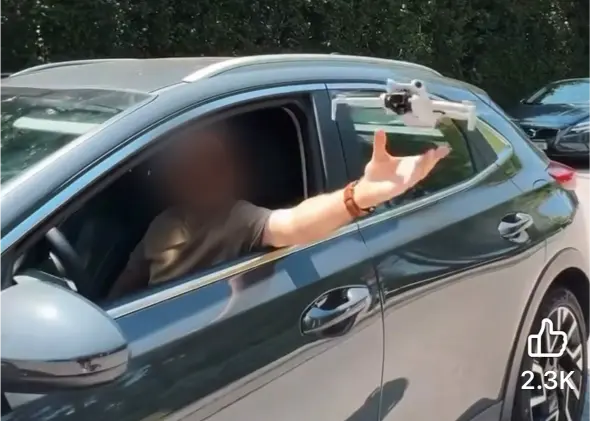
Most people are using DJI so I will focus on these for this example. DJI use a Polycarbonate propellor a type of high performance plastic known for being exceptionally tough, impact and heat resistant, while still being light weight and flexible. In simple terms, it’s a plastic that behaves a bit like metal in strength and rubber in toughness!
Polycarbonate is also used in Bullet proof windows, Safety glasses, Riot shields and Power tool casings, to give you an idea of strong it can be.
Most pilots fly Mode 2, where inputs from the pilot, through the controller, are past to the drone, where the flight controller manages the output to the motors to help maintain stable flight. The flight controller contains multiple sensors including the IMU (Internal Measuring Unit), the Barometer, accelerators, GPS and vision sensors.
The IMU sends a signal to the motors via a speed controller, “You need ‘this’ amount of power to hold this input”.
Now lets put your Hand into this equation:
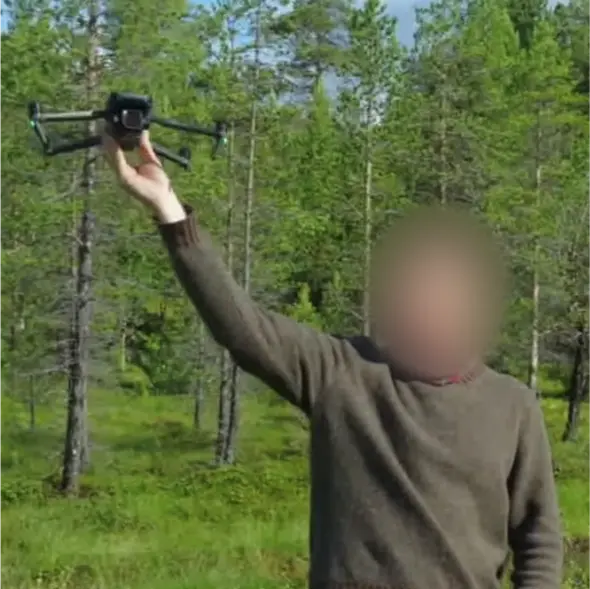
As the blade collides with an immovable object, like your hand, it will be naturally slowed by the impact. However, the immovable object isn’t the flight controller and as a result the IMU senses a change in performance and doesn’t realise your hand is not just a gust of wind. It therefore increases the power to that motor to combat that effect, and it keeps going as it programmed to do just that.
At this point two things can happen, either the blade snaps, but remember its made out of Polycarbonate, OR you skin ends up looking like the image earlier!
So could this be an unsafe practice?
Potential Risks (The Cons)
- A prop can easily slice to the tendon or bone no matter the size.
- Vision systems and obstacle avoidance sensors are easily confused and can react inconsistently in fight leading to erratic movement.
- Releasing a hand from the controller in order to catch the drone means you are no longer in full control of the drone.
- While concentrating on the catch, you risk loosing your spatial awareness to any external risks to your flight.
- Stepping into the flight path risks loose clothing, hair, or straps being inadvertently caught in the propellors, either damaging the aircraft or you.
- Risk of life changing injury or extended recovery periods, preventing ongoing flight operations and the risk to your business or hobby.
- As a CAA-approved pilot you already know: the human hand is not an approved landing pad.
CAP722 5.2.2 The Remote Pilot, Responsibilities, with safety obviously being the prime consideration.
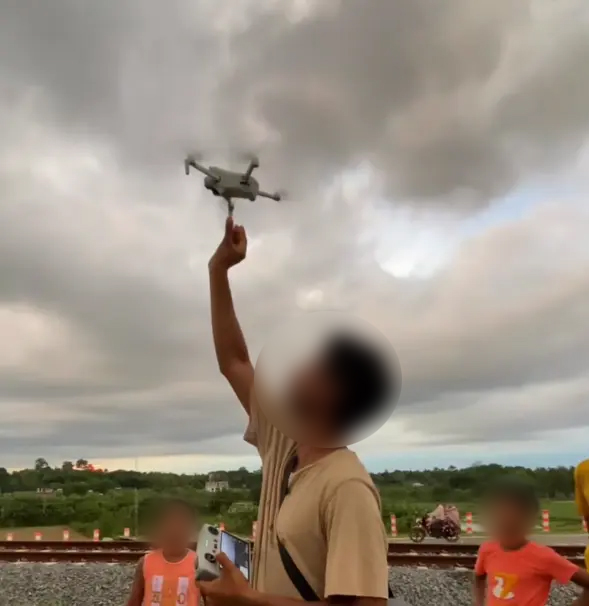
When could it be appropriate?
Is there ever a time when this could be considered a suitable recovery option?
In certain industrial or maritime operations, trained staff with PPE and isolation procedures may consider hand recover aircraft.
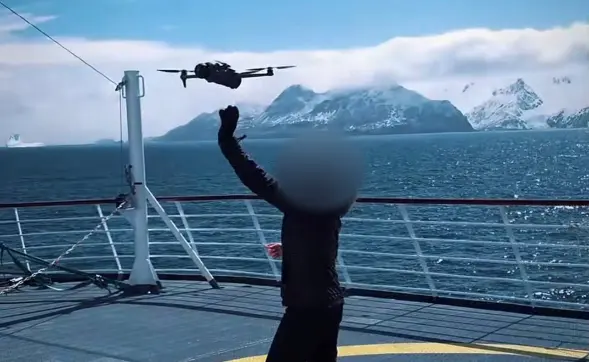
Within commercial operations or industry, this method could be considered where landing areas are considered hazardous, such as maritime operations on small vessels or congested platforms such as oil rigs. Where lines or pipework may disallow a flat landing surface.
Also areas where there is a high risk of ingestion of Foreign Object Debris (FOD) to motors or props, such as sandy locations.
However, any recovery should be made using specific mitigations built into their Operations Manual and Risk Assessment.
Suggested mitigations
- Dedicated catcher + dedicated pilot
- Eye protection + gloves
- Defined approach following a full Risk Assessment
- Emergency kill switch ready
- And even then, it’s a last resort.
How about for non commercial flights? Is this a safe practice for the average consumer?
Many hobbyist pilots may extol the benefits of hand launching, but may have not yet considered the risks.
Whilst I can see where it may be a benefit where you may not wish to risk your aircraft being taken if left unattended, or where footfall might risk it being damaged if placed on the ground nearby (assuming you are using a mini where distances may not be as relevant – eg an open space where dogs may run through the area uncontrolled). Consideration should be made to include mitigations as above where possible. Or actions taken to reduce risk with such a launch. Any launch of this nature should be practiced before hand in a safe environment with the assistance of a friend or flying partner until competent.
Hand Launching may be a contentious subject. Many are for it, some against. Personally, it is not something I would consider teaching my students, as I believe the risks outweigh the positives. However, it is up to the individual pilot to risk assess their own actions and take appropriate mitigations should they choose to use this method. Bare in mind that we are all subject to Article 241, and should we risk harming others by our failed actions to launch or land safely we risk losing a lot more than a potentially cut finger…
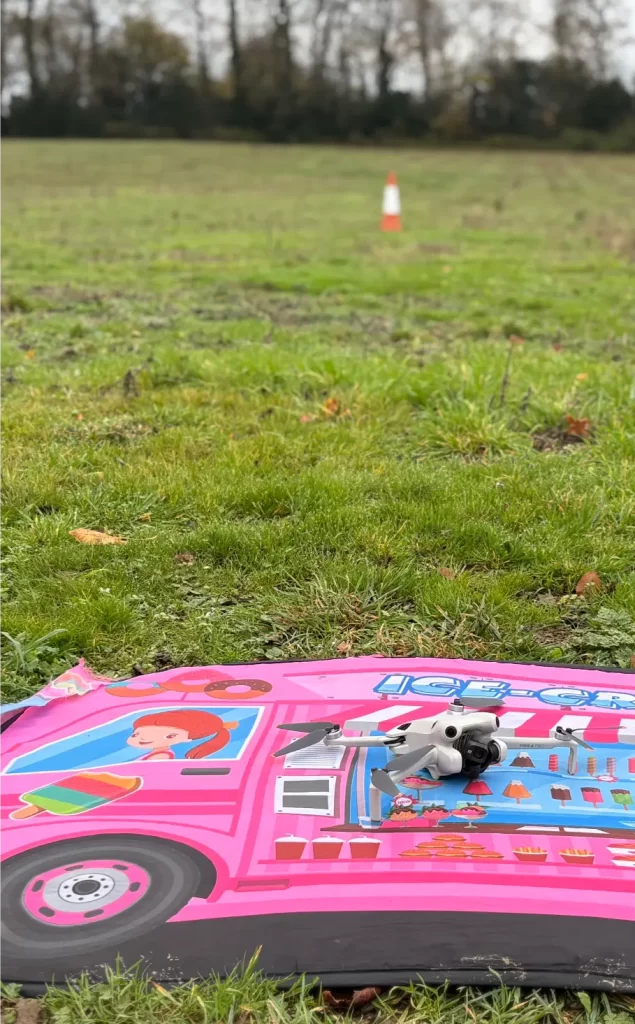
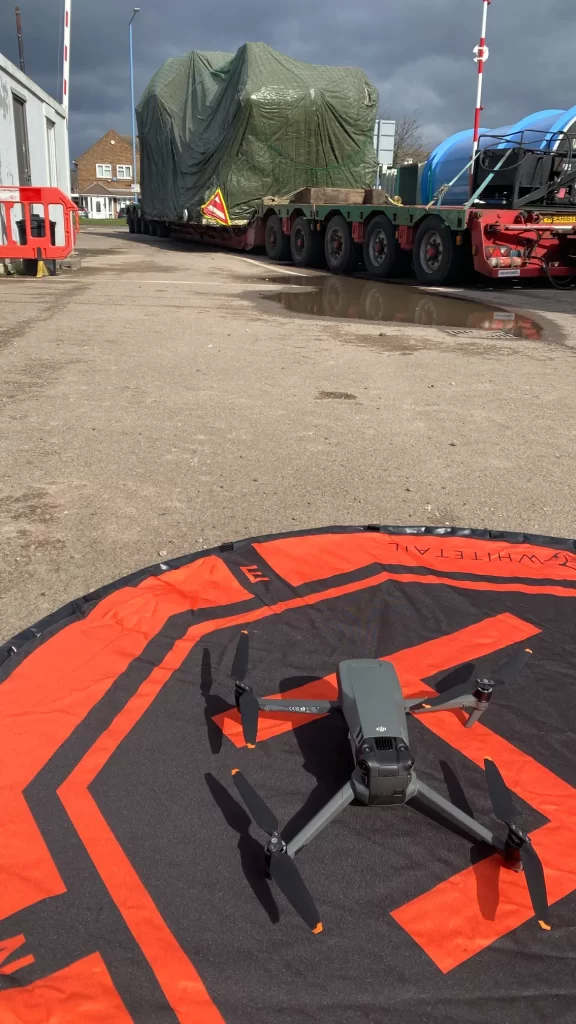
What ever you decide, I believe that nothing can replace a clear space of land and a decent landing mat. They are readily available and easily stowed and keeps the dust and grit out of your motors and off your camera.
For the love of Drones, use a mat!